
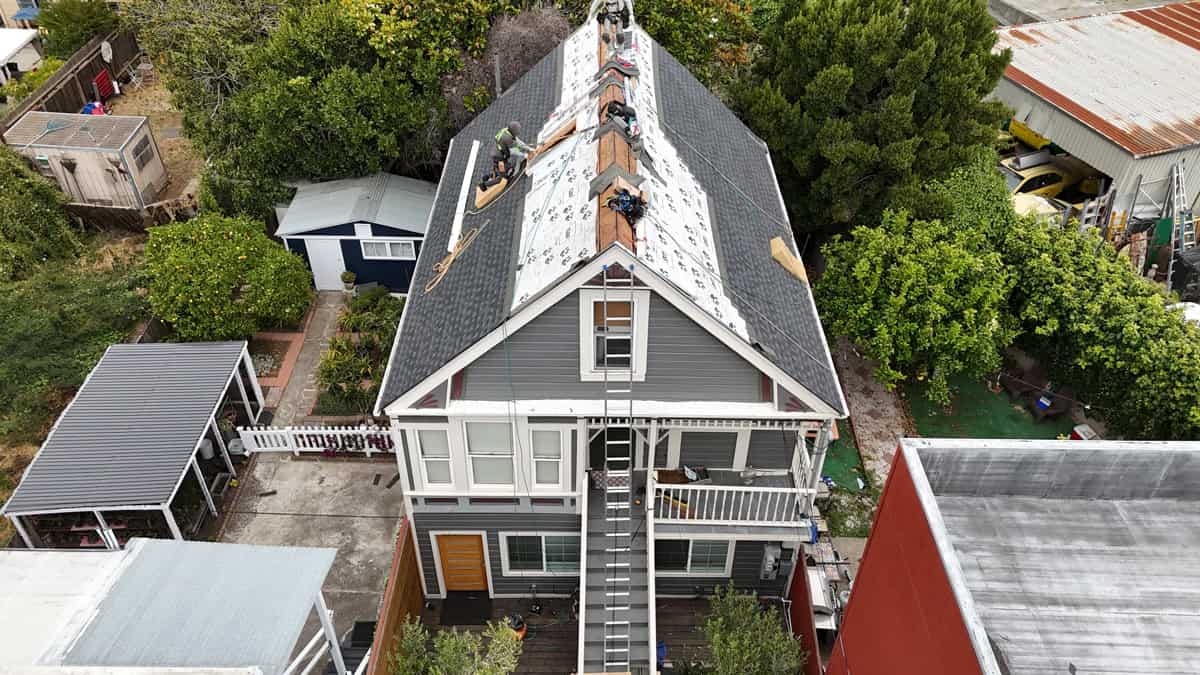
Most homeowners don’t think about what happens if someone gets hurt while working on their roof. But roofing is one of the most dangerous trades in the country, and in California, who you hire can determine who pays when an accident happens.
So can a roofer sue you if they fall off your roof? In California, it’s possible, and the risk is highest when the roofer is unlicensed or the company doesn’t carry workers’ compensation insurance. When you hire a properly licensed C-39 roofing contractor that carries workers’ compensation, an injured worker’s claim is generally handled through the contractor’s insurance, not against you. When you hire someone without a license, California law can treat you as the worker’s employer, and many homeowners insurance policies won’t cover a short roofing job. That can leave you personally exposed to medical bills, lost wages, and a lawsuit.
This article explains how liability generally works, why licensing and insurance matter so much, and the simple steps that protect you before work begins. It’s general information, not legal advice. For questions about a specific situation, talk with an attorney or your insurance agent.
Why Roofing Injuries Are a Real Risk
Roofing consistently ranks among the most dangerous occupations in the United States. According to the U.S. Bureau of Labor Statistics Census of Fatal Occupational Injuries, roofers had a fatal injury rate of 48.7 per 100,000 full-time workers in 2024, compared with 3.3 for all workers combined. That’s roughly 15 times the national average. Falls are the leading cause. At roofing contracting companies, falls accounted for 96 of 120 worker deaths that year.
Most roofing injuries aren’t fatal, but serious falls can lead to long recoveries, lost income, and large medical bills. Someone has to pay for those costs, which is why insurance and licensing matter.
How Liability Works When You Hire a Licensed, Insured Roofing Contractor
When a worker employed by a licensed roofing contractor is hurt on the job, California’s workers’ compensation system is designed to cover the injury. The contractor’s workers’ compensation policy pays for medical care and a portion of lost wages, and workers’ compensation is generally the worker’s main remedy against their employer.
California courts have also generally held that people who hire an independent contractor are not responsible for injuries to the contractor’s employees, with limited exceptions. For example, a homeowner could still face liability for a hidden hazard they knew about and didn’t disclose, or for directing the work in a way that contributed to the injury.
California law adds an extra layer of protection for roofing specifically. Contractors who hold a C-39 roofing license are required to carry workers’ compensation insurance even if they report having no employees. Most other license classifications can file an exemption when they have no employees, but C-39 roofing contractors generally cannot.
What Changes When the Roofer Is Unlicensed
In California, a contractor’s license is required for any job where labor and materials together total $500 or more, which covers virtually every roof repair or replacement.
When you hire someone without the required license, California Labor Code Section 2750.5 creates a presumption that the worker is an employee rather than an independent contractor. California courts have applied this rule to treat a homeowner as the employer of an injured unlicensed contractor and that contractor’s workers. In other words, the protection you’d normally have as the person who hired an independent business may disappear.
Why Your Homeowners Insurance May Not Cover It
California homeowners policies include workers’ compensation coverage for certain household employees. However, the Labor Code excludes many short-term residential workers from that definition, including those who worked for the homeowner fewer than 52 hours in the 90 days before the injury. A typical roof repair or replacement may fall under that threshold, so the homeowner’s policy may not respond.
When an employer doesn’t have workers’ compensation coverage, California law allows the injured worker to file a civil lawsuit for damages. For a homeowner deemed to be the employer, that can mean defending a lawsuit and potentially paying a judgment out of pocket.
Licensed but Uninsured Contractors
A license alone isn’t the whole story. A contractor working outside its license classification, or one whose workers’ compensation coverage has lapsed, can create similar risk. That’s why it’s important to confirm both the classification and the insurance before work starts.
How to Protect Yourself Before Any Roofing Work
These steps take only a few minutes and greatly reduce your exposure:
- Look up the license. Use the Contractors State License Board’s online license check to confirm the license is active and in good standing.
- Confirm the C-39 classification. The license should include the C-39 roofing classification for roofing work.
- Check workers’ compensation status. The CSLB license record shows whether the contractor has workers’ compensation coverage on file.
- Ask for proof of liability insurance. A certificate of general liability insurance covers damage to your property during the project.
- Get a written contract. It should include the contractor’s license number, the full scope of work, and payment terms.
- Be cautious about cash-only, unusually low bids. A price that seems too good can mean the contractor isn’t carrying required insurance.
For more ways to evaluate a contractor, see our guide on questions to ask when hiring a roofing contractor and how to tell you’re working with a good roofing company.
What Homeowners Can Do to Keep the Job Site Safe
Even with a licensed, insured contractor, a few simple steps help:
- Tell the contractor about known hazards, such as fragile skylights, rotted areas, or loose sections
- Keep children, pets, and vehicles clear of the work area
- Let the crew manage access, ladders, and fall protection rather than directing how the work is done
- Avoid going on the roof yourself during the project
Frequently Asked Questions
Does homeowners insurance cover a roofer who gets hurt on my property?
It depends on the policy and the circumstances. Workers’ compensation coverage in California homeowners policies is limited to certain household employees, and many short roofing jobs fall outside it. Ask your insurance agent how your policy applies.
What if a roofer says they don’t have employees?
In California, C-39 roofing contractors are generally required to carry workers’ compensation insurance whether or not they have employees. If a roofer can’t show proof of coverage, that’s a warning sign.
Can I be sued if a licensed roofer is injured?
It’s less likely, because the contractor’s workers’ compensation insurance generally covers employee injuries. Liability can still arise in limited situations, such as a known hazard you failed to disclose.
Is a handyman allowed to repair my roof?
Not if the job is $500 or more in combined labor and materials. Work above that amount requires a licensed contractor, and roofing work should be performed by a contractor with a C-39 roofing classification.
Work With a Licensed and Insured Bay Area Roofing Contractor
Elm Roofing Contractors is a California C-39 licensed and insured roofing contractor, CSLB license #1044595. We serve homeowners and commercial property owners across San Mateo, San Francisco, San Jose, Santa Clara, and the wider Bay Area, and we’re happy to provide proof of licensing and insurance before any work begins.
If your roof needs attention, request a roofing estimate. We’ll inspect the roof, explain what we find, and give you a clear, written proposal.