
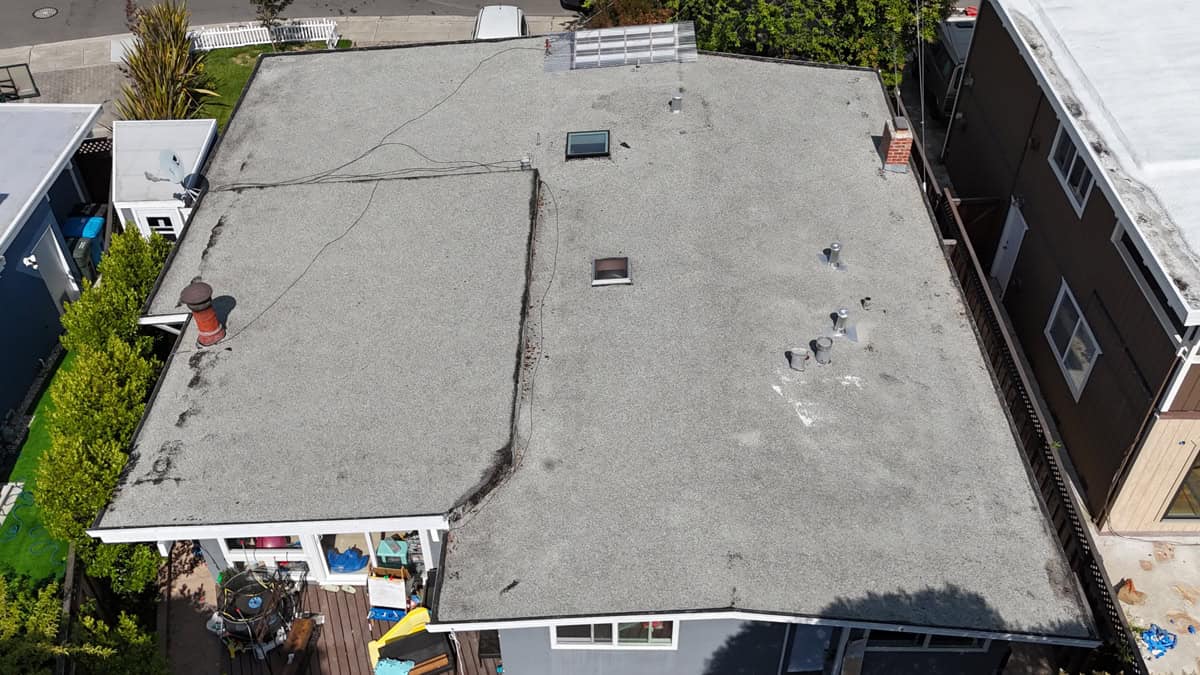
Felt flat roofs are common on Bay Area homes, garages, additions, and small commercial buildings. When one starts leaking or looking worn, the first question most owners ask is whether it can be patched or needs to come off entirely.
So when is flat roof felt replacement necessary, and when is it repairable? A felt roof can usually be repaired when the damage is limited to a few areas, the membrane is still flexible and well bonded, the insulation and deck underneath are dry, and the roof has years of service life left. Replacement becomes necessary when cracking, blistering, or separation between layers is widespread, when water has saturated the insulation across large sections, or when the roof is near the end of its typical 15- to 30-year life and keeps leaking in new places. Moisture testing during an inspection is what separates a repair from a replacement.
This article explains what felt roofing is, the signs that point toward repair or replacement, and how a roofing contractor makes the call.
What a Felt Flat Roof Is
In the U.S., felt flat roofing usually refers to one of two related systems:
- Built-up roofing (BUR). Multiple layers, or plies, of roofing felt bonded together with hot asphalt, typically finished with gravel or a reflective coating. This is the classic tar-and-gravel roof.
- Modified bitumen. Factory-made rolls of asphalt modified with rubber or plastic and reinforced with fiberglass or polyester. These sheets are often installed with a torch, which is why the system is also called torch down roofing.
Both rely on layered, asphalt-based membranes, and they fail in similar ways. If you’re not sure which you have, an inspection will identify it. Our article on torch down roofing explains the modified bitumen system in more detail.
How Long Felt Flat Roofs Last
Most built-up and modified bitumen roofs last somewhere between 15 and 30 years. One common rule of thumb among roofing professionals is that a built-up roof lasts about five years per ply, so a four-ply roof might be expected to reach roughly 20 years. Actual life depends on installation quality, drainage, sun exposure, and maintenance. For a broader look, see how long a flat roof lasts in the Bay Area.
When a Felt Flat Roof Can Be Repaired
Repair is usually the right choice when:
- The leak comes from a specific, identifiable spot, such as a seam, a flashing detail, a drain, or a penetration
- Damage is limited to a small percentage of the roof area
- The membrane still feels flexible rather than dry and brittle
- Blisters are few, small, and not leaking
- Moisture testing shows the insulation and deck are dry beyond the immediate leak area
- The roof is well within its expected service life
Common repairs include patching splits and punctures, re-sealing seams, replacing flashing at walls and curbs, rebuilding drain details, and applying a reflective coating to slow UV aging. Our article on whether a flat roof leak can be patched covers leak repairs specifically.
When Replacement Becomes Necessary
Replacement is usually the better investment when you see:
- Widespread alligatoring or cracking. A pattern of deep cracks across the surface means the asphalt has dried out and lost its waterproofing ability.
- Numerous or growing blisters. Blisters form where layers have separated. A few small ones may be monitored, but many large or spreading blisters indicate the membrane is failing.
- Delamination. Layers peeling apart or seams that won’t stay bonded.
- Wet insulation over large areas. Saturated insulation doesn’t dry out under a membrane. It loses insulating value, adds weight, and can rot the deck.
- Soft or spongy spots when walking on the roof, which often point to deck damage.
- Repeated leaks in different locations despite previous repairs.
- Chronic ponding that can’t be corrected without re-sloping the roof.
When several of these signs appear together, continued patching usually costs more over time than a new roof.
How a Contractor Decides: The Role of Inspection
The most important information on a flat roof is often invisible. A thorough roof inspection typically includes:
- A walk of the full roof surface to look for cracking, blisters, open seams, and soft spots
- A close look at flashing, drains, scuppers, and penetrations, where most leaks begin
- Moisture testing, and sometimes small core samples, to find out whether insulation is wet and how far the moisture extends
- A check of the interior ceiling and, where accessible, the underside of the deck
- A review of drainage, including any areas where water ponds
With that information, a contractor can tell you whether a targeted repair will hold, whether replacing a section makes sense, or whether the roof has reached the point where replacement is the better value.
What Replacement Involves
A felt roof replacement generally includes removing the existing layers, repairing damaged deck sections, replacing wet insulation, correcting drainage with tapered insulation or added drains where needed, and installing a new roofing system with new flashing and edge metal.
Replacement is also a chance to reconsider the system itself. Many owners replace an old built-up roof with modified bitumen, TPO, or another membrane depending on the building, budget, and goals. Our comparison of TPO, modified bitumen, and PVC can help, and our article on flat roof replacement cost in the Bay Area explains what drives the price.
Frequently Asked Questions
Can you put new felt over an old felt roof?
Sometimes. A recover over an existing roof may be allowed when the old roof is dry, sound, and within code limits on the number of layers. Covering wet insulation or a deteriorated membrane traps moisture and shortens the new roof’s life, so moisture testing should come first.
Should I worry about blisters on my flat roof?
A few small, intact blisters aren’t always an emergency, and some contractors recommend monitoring rather than cutting them open. Large, growing, or cracked blisters should be evaluated, since they can open and let water in.
Is a roof coating a substitute for replacement?
A coating can extend the life of a roof that is still structurally sound and dry. It won’t fix wet insulation, widespread delamination, or a membrane that has already failed.
How long does a felt roof repair last?
A quality repair on an otherwise healthy roof can last for years. A patch on a roof that is failing across its surface often buys only a season or two.
Get an Honest Assessment of Your Flat Roof
Elm Roofing Contractors is a California C-39 licensed and insured roofing contractor that repairs and replaces flat and low-slope roofs for homes and commercial buildings across San Mateo, San Francisco, San Jose, Santa Clara, and the wider Bay Area. Our installations are backed by a 10-year workmanship warranty.
If your felt roof is leaking or showing its age, schedule a roof inspection. We’ll test for moisture, explain what we find, and recommend the most cost-effective option, whether that’s a repair or a new roof.