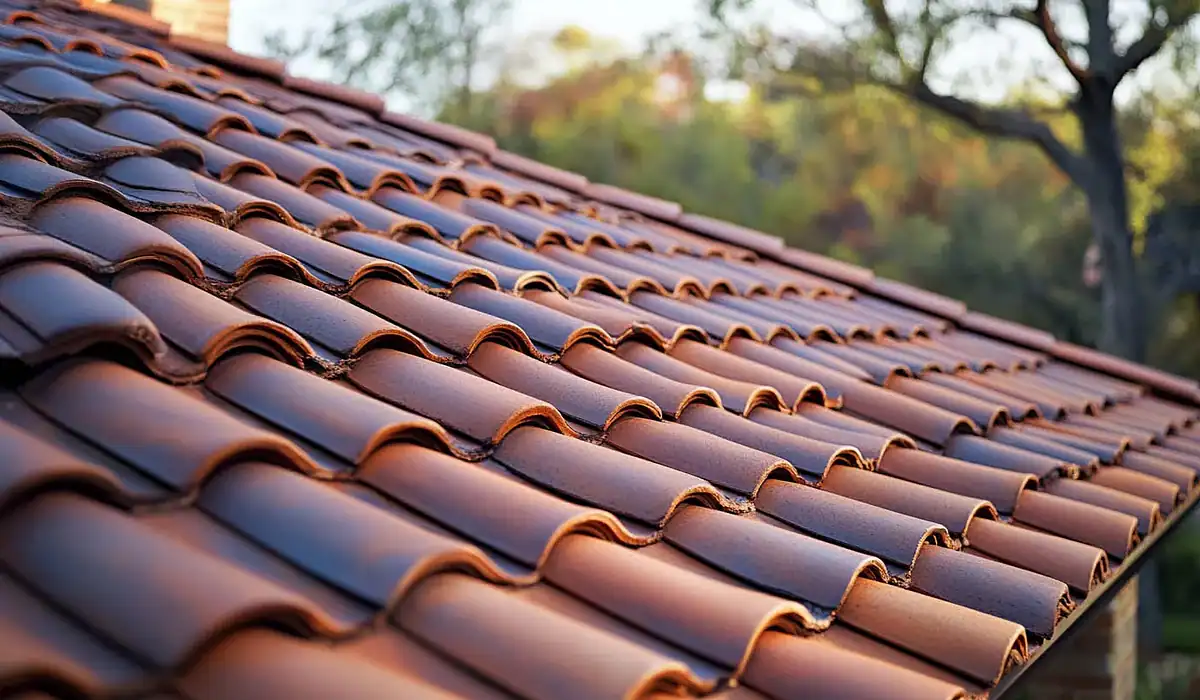
Few roofs say California like the curved, terracotta look of Spanish tile. For decades, that look meant clay. Today, synthetic tiles made from composite materials offer a similar appearance at a fraction of the weight, and many homeowners are weighing the two.
So which is better, synthetic Spanish tile or clay? Clay is the proven choice for longevity and authenticity. Quality clay tile can last 50 to 100 years or more, it’s naturally noncombustible, and it’s often required or preferred on historic homes. Synthetic Spanish tile is far lighter, often a quarter to less than half the weight of clay, which usually means no structural reinforcement is needed. It also resists breakage when walked on. The trade-offs are a shorter track record, warranties that typically run around 50 years, and fire ratings that vary by product. The right choice depends on your home’s structure, your neighborhood’s requirements, and how long you plan to own the property.
Here’s how the two compare on the factors that matter most for Bay Area homes.
What Synthetic Spanish Tile Is
Synthetic, or composite, Spanish tile is a molded roofing product designed to replicate the barrel or S-shaped profile of clay tile. Most products are made from engineered polymers, often blended with recycled materials, with color mixed through the material rather than applied only to the surface. Tiles are installed individually and fastened to the deck, much like other premium roofing products.
Clay tile, by contrast, is natural clay shaped and fired in a kiln. It has been used on Spanish Colonial, Mission, and Mediterranean-style buildings for centuries, and many Bay Area homes built in those styles still carry their original clay tile.
Weight and Structural Requirements
Weight is the biggest practical difference between the two.
Roofing weight is measured per square, which is 100 square feet of roof. Industry sources commonly put clay tile at roughly 600 to 1,000 pounds per square, depending on the profile. One leading composite manufacturer lists its synthetic Spanish tile at about 252 pounds per square. For comparison, asphalt shingles generally fall in the 225 to 350 pound range.
That difference matters if you’re converting from asphalt shingle to a Spanish tile look. A home framed for shingles may need an engineering review and added structural support before clay can go on. A synthetic tile usually avoids that cost. If your home already has clay tile, the framing was built for the weight, so the structure is less of a deciding factor.
Lifespan and Track Record
Clay tile has a long, documented history. Well-made clay tile commonly lasts 50 to 100 years or more, and many tiles outlive the underlayment beneath them several times over.
Synthetic tiles are newer. Leading products carry limited warranties of around 50 years, but the category doesn’t yet have the century-long field record that clay does. That doesn’t mean synthetic tile won’t perform, only that its long-term behavior is based on testing and a few decades of use rather than generations.
With either material, the underlayment beneath the tiles will need attention long before the tiles do. Our article on tile roof underlayment lifespan in California explains why.
Durability and Maintenance
Clay tile is hard and durable once installed, but it’s brittle. Tiles can crack when someone walks on them, when a branch falls, or when a technician services rooftop equipment or solar panels. Replacing broken clay tiles requires matching the profile and color, which can be difficult on older roofs.
Synthetic tile is more flexible and generally resists cracking from foot traffic and impact. Several products carry a Class 4 impact rating, the highest rating under the UL 2218 standard. That makes routine maintenance simpler and less risky.
Fire Ratings: An Important Detail in California
Clay tile is noncombustible and is typically part of a Class A fire-rated roof assembly, the highest rating available.
Synthetic products vary. Some composite Spanish tiles are available in both Class A and Class C versions, and the Class A rating may depend on a specific underlayment or installation method. Many parts of the Bay Area fall within designated fire hazard severity zones, where building codes require a Class A roof assembly. Before choosing a synthetic tile, confirm that the exact product and installation method meet Class A requirements for your address. Our article on fire-resistant roofs covers this in more detail.
Appearance and Neighborhood Requirements
Good synthetic tile can look convincing from the street, and color runs through the material so chips are less noticeable. Up close, natural clay has a depth of color and variation that’s hard to fully replicate, and it weathers in a way many owners value.
If your home is in a historic district or governed by a homeowners association, check the rules before you choose. Some require natural clay on historic or architecturally significant homes.
Cost Considerations
Prices vary widely by product, roof size, and complexity, so we don’t quote either material without an inspection. In general, clay tile carries higher material costs and requires more careful, labor-intensive installation. Synthetic tile may cost less overall when it eliminates the need for structural reinforcement, and it can be less expensive to maintain over time because fewer tiles break. Our article on why roofing costs vary between homes explains the factors that drive any estimate.
Synthetic vs. Clay at a Glance
| Synthetic Spanish Tile | Clay Spanish Tile | |
|---|---|---|
| Typical weight per square | Roughly 250 lbs for leading products | Roughly 600 to 1,000 lbs |
| Expected lifespan | Warranties around 50 years | 50 to 100+ years |
| Fire rating | Varies by product (Class A or Class C) | Noncombustible, typically Class A |
| Breakage when walked on | Resistant | Prone to cracking |
| Structural reinforcement | Rarely needed | May be needed when converting from shingles |
| Best fit | Lighter structures, Spanish look on a converted roof | Historic homes, long ownership, existing tile framing |
Which Is Right for Your Home?
Clay is usually the better fit when your home already carries tile, when authenticity matters, or when you plan to stay for decades. Synthetic tile is often the better fit when you want the Spanish tile look on a home framed for lighter roofing, when the roof sees regular foot traffic, or when reducing structural load is a priority. For a broader look at tile options, see our comparison of clay vs. concrete tile roofs.
Frequently Asked Questions
Can synthetic tile be installed over existing clay tile?
No. Tile roofs are not installed as overlays. The existing tile is removed, and the deck and underlayment are inspected and prepared before any new tile is installed.
Is synthetic Spanish tile approved for fire zones?
Some products are rated Class A when installed as specified, and some are not. Check the exact product rating and installation requirements against your local code before you commit.
Can I mix new synthetic tiles into an existing clay roof for repairs?
It isn’t recommended. The materials differ in appearance, weathering, and how they fit together. Repairs on a clay roof should use matching clay tile.
Does a tile roof need a structural engineer?
Not always. If your home was designed for tile, the framing is typically adequate. When converting from a lighter roof to clay or concrete tile, an engineering review is often required.
Talk With a Bay Area Tile Roofing Contractor
Elm Roofing Contractors is a California C-39 licensed and insured roofing contractor that installs and repairs tile roofs for homeowners across San Mateo, San Francisco, San Jose, Santa Clara, and the wider Bay Area. Our installations are backed by a 10-year workmanship warranty.
If you’re deciding between synthetic and clay tile, speak with a Bay Area roofing expert. We’ll inspect your roof structure, review any local or HOA requirements, and help you choose the material that fits your home.