If you’ve collected quotes for a flat roof, there’s a good chance at least one of them recommended torch down roofing. The name sounds dramatic, and property owners often have questions about what it is, how it compares with TPO or EPDM, and whether an open flame on the roof is safe.
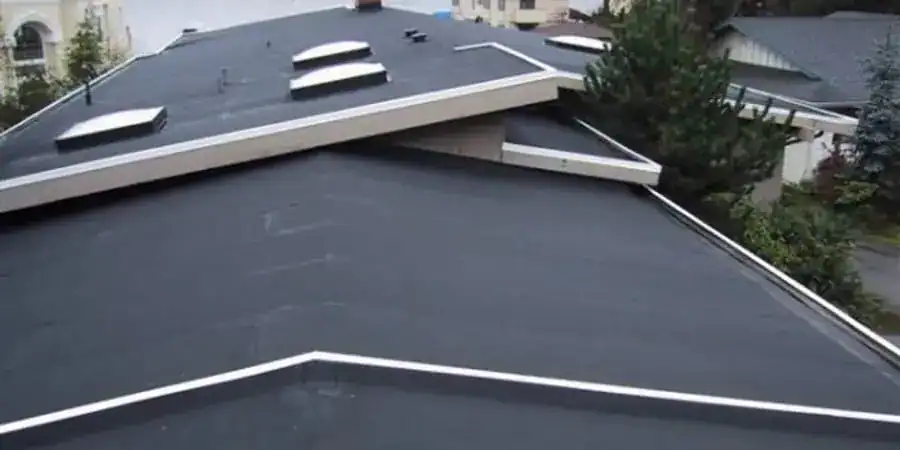
So what is torch down roofing? Torch down roofing is a type of modified bitumen flat roof system. Rolls of asphalt that have been modified with polymers are heated with a propane torch so the underside melts and fuses to the layer beneath, forming a thick, continuous, multi-layer membrane. It’s durable, handles foot traffic well, and typically lasts 15 to 25 years with proper maintenance. Because it’s installed with an open flame, it should only be applied by trained crews following established fire-safety practices.
This article explains how torch down roofing works, where it performs best, its advantages and limitations, and what to ask a contractor before choosing it.
What Is Torch Down Roofing?
Torch down is one installation method for modified bitumen roofing. Modified bitumen is asphalt blended with polymers that make it more flexible and durable than traditional asphalt roofing. The sheets are reinforced with fiberglass or polyester and manufactured in rolls.
There are two main types of modified bitumen:
- APP (atactic polypropylene): A plastic-type modifier that holds up well to heat and UV. APP membranes are most often torch-applied.
- SBS (styrene-butadiene-styrene): A rubber-type modifier that stays flexible at lower temperatures. SBS membranes can be torch-applied, set in hot asphalt, cold-applied with adhesive, or self-adhered.
Both types are proven flat roofing materials. The right choice depends on the building, the roof deck, and the details of the project.
How Torch Down Roofing Is Installed
A typical torch down roof is built in layers:
- Preparation. The old roof is removed or evaluated, the deck is inspected and repaired, and insulation or a cover board is installed. This is also the stage where tapered insulation can be added to improve drainage.
- Base sheet. A base layer is installed and secured to the roof deck or insulation.
- Cap sheet. The cap sheet is unrolled over the base sheet while the installer heats the underside with a torch, fusing the two layers together. Seams are overlapped and heat-welded.
- Flashing and details. Parapet walls, drains, vents, and edges are flashed with modified bitumen to create a continuous waterproof system.
The cap sheet is usually surfaced with mineral granules, which protect it from UV. Reflective, light-colored cap sheets and coatings are also available to reduce heat gain.
Advantages of Torch Down Roofing
Strong, Fused Seams
When properly heated, torch down seams melt together rather than relying on adhesive or tape. That creates a monolithic membrane with fewer weak points.
Durability and Foot Traffic Resistance
A multi-layer modified bitumen membrane is thick and tough. It resists punctures and tears better than many single-ply systems, which makes it a good fit for roofs that see maintenance traffic or have rooftop equipment.
Excellent Detail Work
Modified bitumen bonds tightly to flashing and conforms well around parapet walls, penetrations, and irregular roof shapes. That’s valuable on older Bay Area buildings with complex rooflines.
Repairable
Torch down roofs can be patched and repaired with compatible materials, which helps extend their service life.
A Proven Track Record
Modified bitumen has been used on flat roofs for decades, and roofing contractors and inspectors are very familiar with how it performs and ages.
Limitations of Torch Down Roofing
Fire Risk During Installation
The torch is the system’s biggest drawback. Open flames near combustible materials, such as wood decks, insulation, or debris in wall cavities, create a fire risk if proper practices aren’t followed. The National Roofing Contractors Association (NRCA) recommends against torching directly over wood roof decks and calls for specific detailing where flashing meets combustible materials. We cover safety practices in more detail below.
Heat Absorption
Standard dark or granulated cap sheets absorb more heat than a white TPO membrane. Reflective cap sheets and coatings can reduce this.
Installation Quality Matters
Under-heated seams won’t bond fully, and overheating can damage the membrane. The system’s performance depends heavily on the skill of the crew.
Lifespan
Torch down generally lasts 15 to 25 years. That’s comparable to other flat roof systems, but not the longest option. For a side-by-side view, see how long a flat roof lasts in the Bay Area.
Torch Down Fire Safety: What Property Owners Should Know
Torch down roofing can be installed safely, but only when the contractor takes fire prevention seriously. Since 2004, NRCA and the Midwest Roofing Contractors Association have run the Certified Roofing Torch Applicator (CERTA) program to train installers in safe torch application.
Industry best practices include:
- No direct torching over combustible surfaces. Wood decks and combustible flashing substrates call for a protective layer, a cold-applied or self-adhered base, or an alternative flashing method.
- Fire extinguishers on the roof. Extinguishers should be within reach of every torch operator.
- A fire watch after torching stops. CERTA’s safety practices call for a fire watch of at least two hours after the last torch is turned off, because smoldering materials can ignite long after the work appears finished.
- Hot-work permits where required. Some jurisdictions and building owners require a permit or hot-work authorization before torching.
Questions to Ask Before Choosing Torch Down
- Is your crew trained in safe torch application, such as through the CERTA program?
- How will you protect combustible areas like the deck, parapets, and wall cavities?
- Will there be a fire watch after torching each day, and for how long?
- Are you licensed and insured for this work in California?
A qualified contractor should be able to answer these questions clearly.
Torch Down vs. Other Flat Roof Systems
Torch down is one of four systems we commonly install on Bay Area flat roofs. Here’s how it generally compares:
- TPO: A white single-ply membrane with heat-welded seams. Highly reflective and a popular choice for energy efficiency.
- EPDM: A synthetic rubber membrane that stays flexible and has a long service life.
- Spray foam: A seamless, insulating system protected by a topcoat that’s renewed periodically.
- Torch down: A thick, multi-layer system that’s strong underfoot and excellent at complex details.
Our article on flat roof systems explained goes deeper into how single-ply and modified bitumen systems compare.
When Torch Down Is a Good Fit
Torch down tends to be a strong choice for:
- Roofs with regular foot traffic or rooftop equipment
- Buildings with complex rooflines, many penetrations, or parapet walls
- Residential flat roofs, garages, and additions where durability is a priority
- Commercial roofs where puncture resistance matters
It may be less suitable where the roof deck or surrounding materials are highly combustible and alternative application methods aren’t practical, or where maximum reflectivity is the top priority. An inspection helps determine which system fits the building.
Frequently Asked Questions
How long does torch down roofing last?
Most torch down roofs last 15 to 25 years. Proper installation, good drainage, and regular maintenance determine where a roof falls in that range.
Is torch down roofing safe?
Yes, when it’s installed by a trained crew following fire-safety practices, including protecting combustible materials and maintaining a fire watch after torching.
Is torch down better than TPO?
Neither is better in every case. Torch down offers greater thickness and puncture resistance, while TPO offers higher reflectivity. The right choice depends on the building’s use, rooftop traffic, and energy goals.
How much does torch down roofing cost?
National cost guides generally place modified bitumen roofing at about $4 to $8 per square foot installed, with Bay Area projects typically higher due to local labor and access costs. Our guide to flat roof replacement cost in the Bay Area explains what drives the price.
Can torch down roofing be repaired?
Yes. Damaged areas can usually be patched with compatible modified bitumen materials, provided the insulation beneath is dry. See our article on flat roof repair for more.
Talk With a Licensed Torch Down Roofing Contractor
Elm Roofing Contractors is a California C-39 licensed and insured roofing contractor. We install and repair torch down, TPO, EPDM, and spray foam roofing systems for residential and commercial properties across San Mateo, San Francisco, San Jose, Santa Clara, and the Bay Area.
If you’re considering torch down roofing or want to know which flat roof system suits your building, schedule a roof inspection. We’ll evaluate your roof and walk you through the options.